Board's Desk
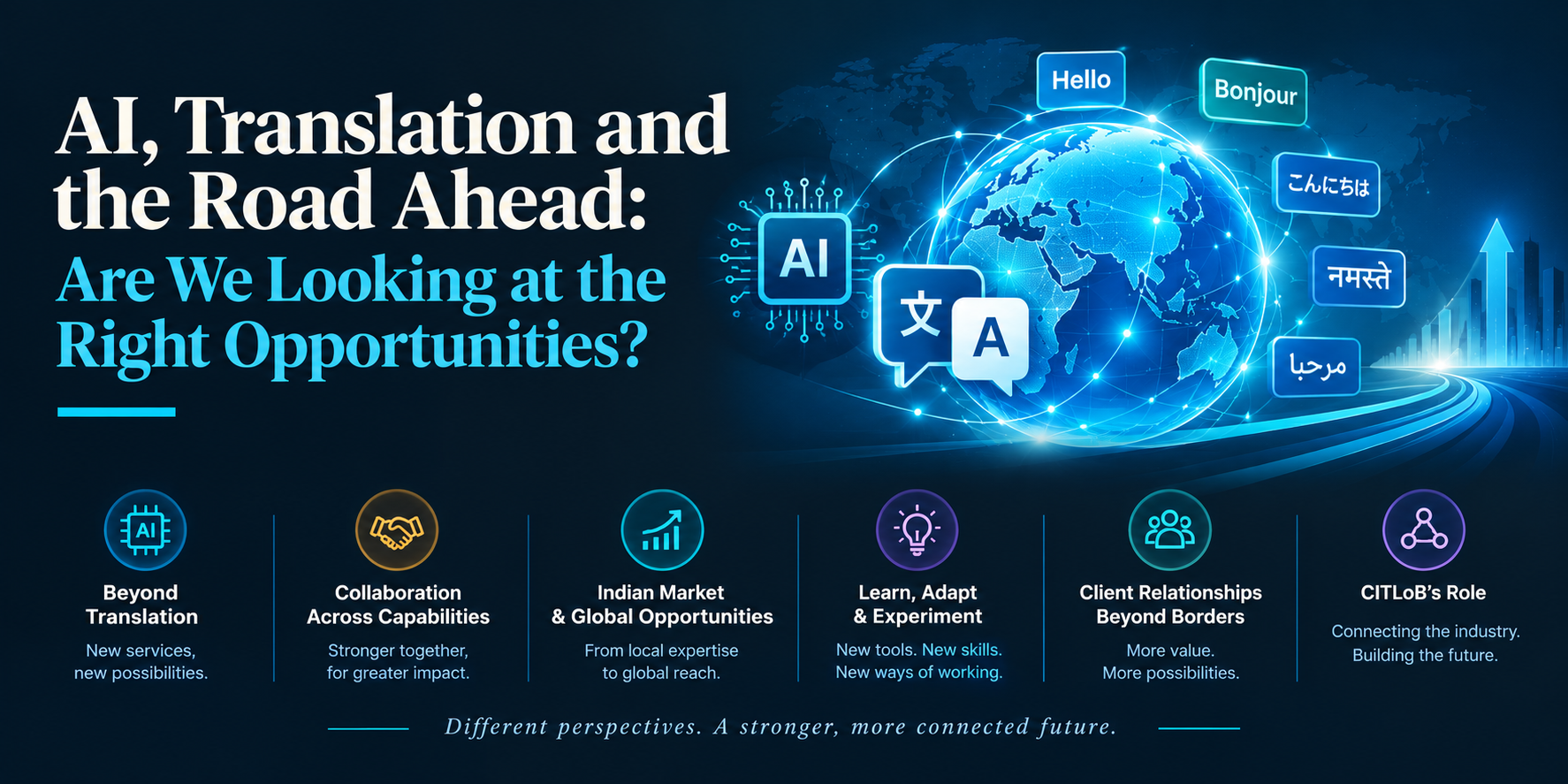
Our industry is experiencing a profound transformation. The traditional pipeline-led translation ecosystem is steadily giving way to a more dynamic, intelligence-driven model powered by AI, automation, and multimodal communication. For our community, this moment is more than a technological shift—it is an opportunity to redefine our collective role in the global content economy.
While AI, automation, LLMs are accelerating volume, speed, and scale, the heart of localisation has not changed. What clients truly seek today is trust: trust in cultural accuracy, content intelligence, multichannel readiness, and domain-specific expertise. These are areas where human judgement, experience, and domain understanding remain irreplaceable. This is precisely why our community stands at the cusp of a new value frontier.
The growth areas are clear. Healthcare, eCommerce, BFSI, automotive, government and media industries are adopting AI-enhanced localisation at unprecedented scale. The emerging landscape opens doors far beyond translation and review. Linguists, engineers, and localisation specialists are evolving into content intelligence experts, AI auditors, linguistic risk managers, UX and conversational designers, and multimodal storytellers.
Opportunities are strongest for those who evolve into hybrid roles. Linguists who build competencies in data annotation, quality governance, linguistic AI evaluation, content safety review, conversational design, and scriptwriting for synthetic media will lead the next decade. Similarly, engineers and PMs who understand automation, API-driven workflows, and AI evaluation frameworks will become indispensable.
The future will reward domain expertise, strategic thinking, and multimodal skills. Human value is shifting from translation execution to interpretation, judgement, creativity, and risk mitigation. While AI handles scale, humans will own meaning, context, and trust.
Partnering with Linguists to Build Future-Ready Capabilities
LSPs and the Localisation association will play a crucial role in the coming days in helping linguists transition into next-generation localisation roles. Transforming into a learning hub, the LSP should consider offering continuous training in AI literacy, domain expertise, and multimodal content skills. It must create pathways for hybrid roles such as linguistic QA, content safety, AI evaluation, UX writing, and synthetic media adaptation. Providing hands-on access to AI tools, clear evaluation frameworks, and supportive SOPs helps linguists work confidently with new technologies. Involving linguists in style guides, model improvement, and pilot projects fosters co-ownership. Finally, transparent career paths enable linguists to grow from translators into specialised language strategists.
For those willing to unlearn old habits and embrace new technologies, the localisation industry is not shrinking—it is expanding into new, exciting, high-value territories. The time to reposition yourself is now.
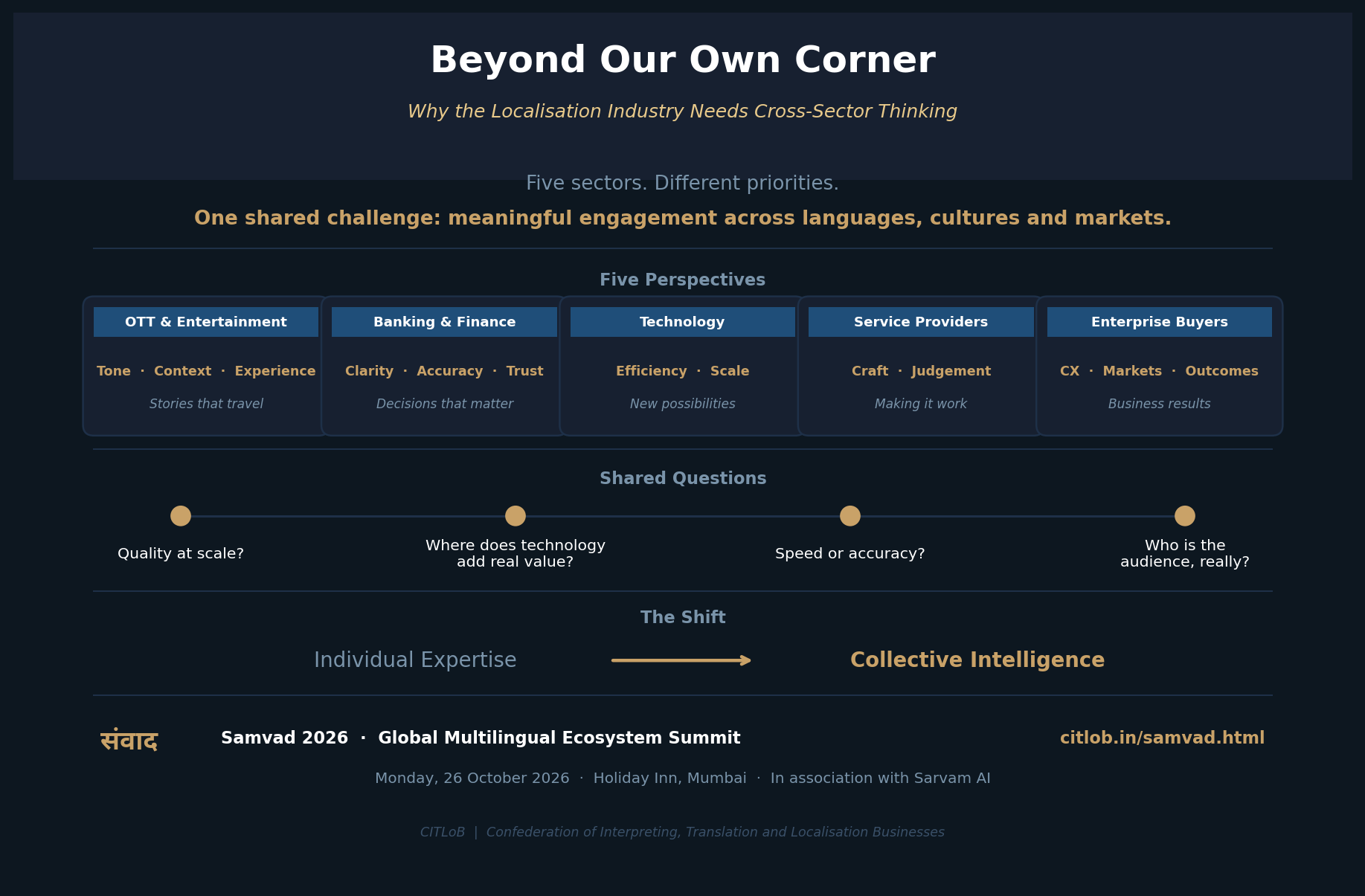
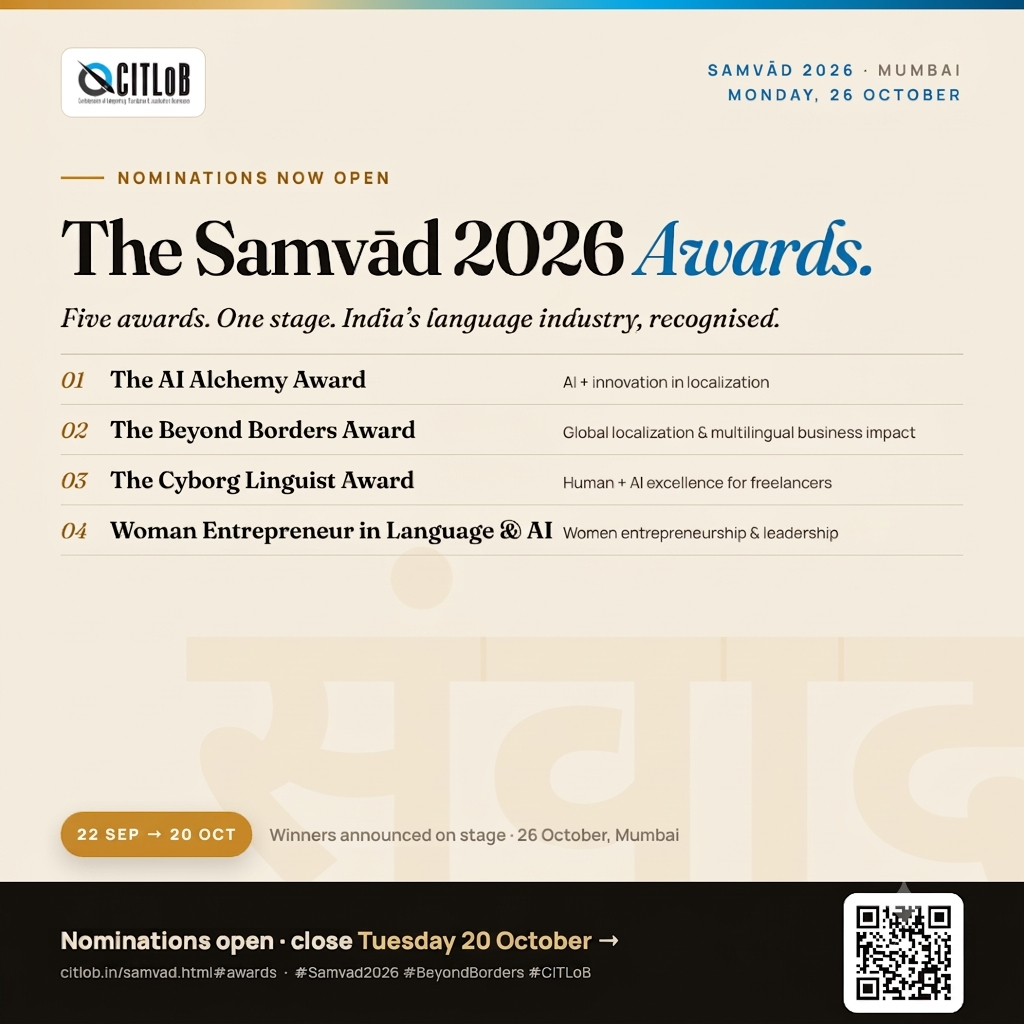
One such effort by CITLoB is to create a thriving ecosystem for its members through its annual summit, Samvād, conducted recently on 30 and 31st October 2025 in New Delhi. Participants included buyers, government representatives, academia, media, market-research professionals, global language associations, from traditional to emerging language-technology companies, and linguist ranging from newcomers to industry veterans. The two-day event served as a platform for unbiased training, mentoring, knowledge sharing, insights, future-focused discussion, and ample opportunities for networking and engagement.
Regards,
Padma Balakrishnan
Vice President - CITLoB
Co-founder & CEO - Knowledgeworks