Speaking Free! August is a special month for India. It’s the month of patriotism, the celebration of independence and also reinforcing relationships through ‘friendship’ and ‘Rakhi’. For the Indian language industry as well, it is a time for celebration stimulated by increasing awareness of the multilingual nature of India across the globe. More and more […]
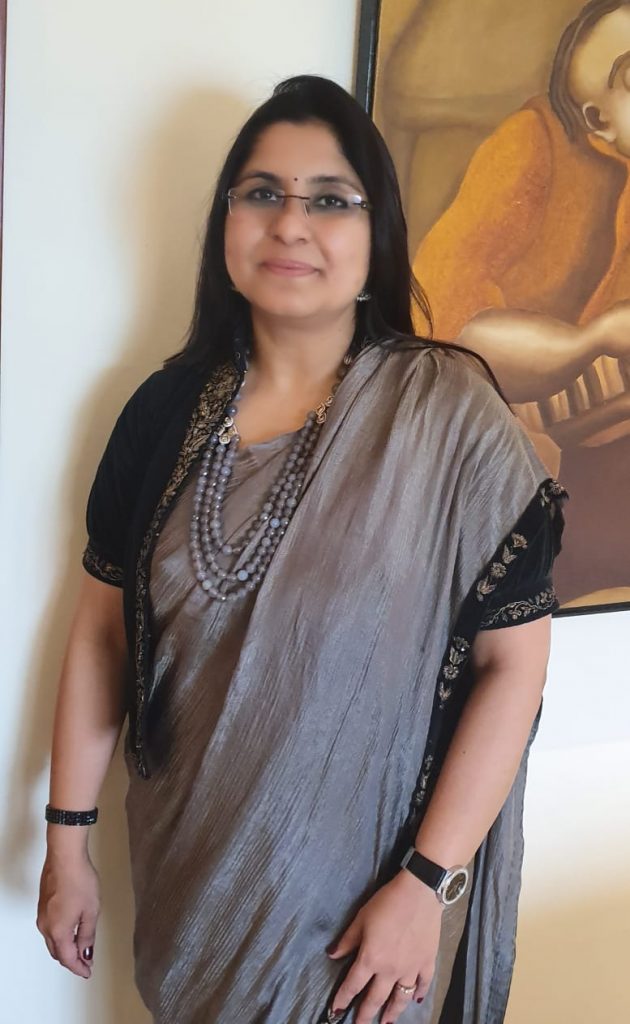
Vidula Tokekar Editor| IndoVox
Speaking Free!
August is a special month for India. It’s the month of patriotism, the celebration of independence and also reinforcing relationships through ‘friendship’ and ‘Rakhi’.
For the Indian language industry as well, it is a time for celebration stimulated by increasing awareness of the multilingual nature of India across the globe. More and more foreign entities – be it publishers, entertainers, gamers, trainers, educationists – are taking note of the language power and the needs of the Indian market.
The Slator.com interview of Mr. Sandip Nulkar, President, CITLoB is one more indication of the interest that international language consumers are taking in the Indian language industry.
The credit undoubtedly goes to the ‘nine of ten new Internet users’ from India who use the Internet in their native language. They are speaking, writing, shooting and dubbing freely in their language; celebrating the true free spirit of India!
How ready is the Indian translating industry to take on the new demands? Though bilingual skills may exist, perhaps sophistication in the areas of use of technology, standardization, and quality certification may bring the Indian LSPs at par with international players.
Sarika Gulyani, Director & Head-ICT, Digital Economy & FICCI-ILIA Division – our guest of the month shares her views and vision of the Indian language industry. Readers will enjoy the passion of her vision and ponder on the points she has raised.
Covid19 is here to stay – at least for a while, and we are coping with it. The language industry is one of the few businesses that can be carried out in the ‘WFH’ model. Advocate Shailendra Pathak shares the legal angle of working from home.
I hope you enjoy reading the issue.
Stay safe, stay healthy, stay positive!
Let’s celebrate the spirit of ‘unity in diversity’ of languages.
The Indian language industry is witnessing unprecedented demand for services and technology in Indian languages. On that backdrop, we asked 3 key questions to the person who is working closely with industry, technology and governments. Here are her detailed, candid and straight-from-the-heart answers. We are happy to present to you the guest of the month, Ms […]
The Indian language industry is witnessing unprecedented demand for services and technology in Indian languages. On that backdrop, we asked 3 key questions to the person who is working closely with industry, technology and governments. Here are her detailed, candid and straight-from-the-heart answers. We are happy to present to you the guest of the month, Ms Sarika Gulyani, Director, and Head-ICT, Digital Economy & FICCI-ILIA (the Indian Language Internet Alliance Division at the Federation of Indian Chambers of Commerce & Industry) at FICCI. (More about her here).
It is very interesting that India’s premier industry body, FICCI, felt the need to form FICCI-ILIA (The Indian Language Internet Alliance). What drove this decision?
Since its foundation in 1927, FICCI has always been working with the industry and the Government of India for the sustainable development of the Indian economy. With the same intentions and further understanding the huge role played by the internet as an effective tool of socio-economic development, and how Indic language can further act as a catalyst for this transformation, FICCI launched FICCI-ILIA initiative in 2017. FICCI-ILIA is an alliance which works with different stakeholders of the ecosystem for the growth of the language industry of India. One of the biggest concerns and the reason behind the foundation of this alliance was the language technology industry of India working in silos, and the crucial need of a neutral platform for the promotion of the sector. FICCI-ILIA is an alliance of multiple stakeholders working in the Indic Internet and Language Technology domain to unite, collaborate and cooperate for the bigger goal.
2. And how is the Government of India supporting this initiative?
The Government of India has always been supportive of this initiative from day one. In fact, the FICCI-ILIA initiative was launched by the then State IT Minister, Shri P.P. Chaudhary. FICCI-ILIA’s flagship annual symposium ‘Bhashantara’ has been partnered and supported by the Ministry of Electronics and IT, Government of India every year. We recently hosted a technology-based language translation competition ‘BhashaAnuvad’, which was highly appreciated by both the Government of India and industry partners. Besides these, FICCI-ILIA has also partnered with State Governments of Maharashtra, Karnataka, and Rajasthan in initiatives like Marathi Conclave, Kannada Connect, Rajasthan Connect, and others to bring various players together on a single platform. And we shall continue to expand our State presence and collaboration in the coming months. We are further delighted to share that the Government has also increased its focus on Indic Internet and Language Technology, and FICCI-ILIA has been involved as subject matter experts on several occasions.
3. Can you shed some light on FICCI-ILIA’s future plans?
The prime objective of FICCI-ILIA is the sustainable development of the Indic Internet and Language Technology sector of India. Our main plan is to bring more and more individuals and organisations including various state government departments to our alliance. And with the same objective, we shall be expanding our activities in the states. We shall connect with more and more partners and government departments at the state level so that we can make a stronger and versatile alliance. We will focus on developing some policy and standards around language technologies. As we are collaborating with various international organisations like ICANN for Universal Acceptance initiatives, we shall also focus on expanding our presence at the global level, so that our members and our industry can be represented unanimously at the global level.
4. We are witnessing unprecedented demand for services and technology in Indian languages. In your opinion, how would traditional LSPs need to adapt or evolve to benefit from this huge opportunity?
Indeed, there is a huge potential in language technology and service industry in India. We already have 22 official languages, and with the rise of Digital India, the demand is increasing day by day. The ecosystem and the technologies are also changing rapidly. Traditional LSPs have to adapt to emerging technologies, like Machine Learning and NLP. We, as an industry, have to come up with innovative solutions, to grab new opportunities. The time is opportune to show up and think out of the box as there is immense support from the Government of India as well. Also, we have to take into account the paradigm shift caused by COVID-19. With the rise of the pandemic and subsequent change in industry norms, there is a huge potential for the digital industry, especially the Language Technology industry. It has its application in sectors like healthcare, education, research, etc., and we have to leverage this opportunity via innovation and dynamic thinking.
Dear friends, I am very happy to present to you IndoVox, our monthly newsletter and one of the many initiatives planned to lend substance to our association. It has been extremely satisfying to see CITLoB move ahead so quickly and with resolve and purpose. We have gathered significant momentum with new members signing up every […]
Sandeep Nulkar President |CITLoB
Dear friends,
I am very happy to present to you IndoVox, our monthly newsletter and one of the many initiatives planned to lend substance to our association.
It has been extremely satisfying to see CITLoB move ahead so quickly and with resolve and purpose. We have gathered significant momentum with new members signing up every week and hope to build on it further, by providing greater value to each one of you.
Technology has brought nearly a billion Indians online and with that, a plethora of opportunities as well. The need for an association could not have been greater at any moment in time than it is now. In an industry that is as fragmented as it is unorganised, CITLoB thus aspires to be a platform that members can leverage not only for greater visibility and credibility, but also for credible information and as a source of learning. The thoughtfully curated sections of Indovox will hopefully be an important tool in meeting each of these objectives.
Having been a part of the industry since the very early nineties, I know how all of us have been plagued by the same problems but haven’t really been able to help the cause beyond a point. CITLoB is our chance to change that because together we are greater than the sum of our parts.
Take care and stay safe all of you. Happy reading and happy CITLoB-ing!
Geoffrey Bowden is the Secretary of the EUATC since January 1992. He has seen various developments and transformations of language businesses across Europe. Geoffrey has been instrumental in forming about 12 partnerships so far with numerous trade associations. He was keen that India should have an active association too. [More about him here]. Geoffrey promptly […]
Geoffrey Bowden is the Secretary of the EUATC since January 1992. He has seen various developments and transformations of language businesses across Europe. Geoffrey has been instrumental in forming about 12 partnerships so far with numerous trade associations. He was keen that India should have an active association too. [More about him here].
Geoffrey promptly agreed to address the CITLoB members by means of a small interview for the maiden issue of IndoVox. Read on:
1. You have played a role in founding and helped run several associations over the last 40 years. Please share your personal take on why associations are important and how, in your opinion, do they help members in particular, and the industry in general?
It is a little daunting to think that I really have been working with professional and trade bodies for that long! However, it is true. Apart from the language industry, which is the sector I have continuously served across four decades, I have supported umbrella organisations in the health and medical professions, the motorcycle and accessories industries, the building and construction sectors and the pharmaceutical industry. A pretty diverse cross-section of the economy, but each umbrella group has delivered some common benefits to their members.
Providing a strong unified voice that speaks to legislators, practitioners and the marketplace
Creating awareness of a sector and helping to grow markets
Developed programmes for continued development and sharing best practices
Professionalising a sector through the introduction of a Code of Conduct
The promotion of the highest standards
Of course, there are many other benefits, but you cannot underestimate the value of providing a safe space where market rivals can come together to discuss issues of common concern and agree on sector-wide solutions under an association banner. The motto from The Three Musketeers best describes this approach – “One for all and all for one!”
2. The recent agreement between the EUATC and CITLoB is an encouraging start for CITLoB. How do you think that would help the members from both the associations, especially when India is becoming an increasingly attractive market to be a part of?
The growing importance of the Indian economy and the complexity of doing business with such a vast subcontinent with a population of 1.3 billion cannot be underestimated. However, only 10 percent of the population speaks English and while there are 22 official languages, there are still 13 different written scripts, and over 1620 dialects. This means that any European-based LSP could be entering a minefield if it does not have reliable partners to turn to. That’s where the partnership with CITLoB will prove to be so vital. There are more than 640 EUATC Network Members belonging to the 23 national associations members of the EUATC. All of those companies need some peace of mind when seeking out Indian partners with whom to work. Rather than being seduced by a flashy website, they can now turn to CITLoB members, safe in the knowledge that its members are signed up to deliver their services while adhering to the principles underpinning the governance of the Association. And in the unlikely event of anything going amiss, it can turn to CITLoB to help resolve the issue.
3. You have similar partnerships with several other countries. Could you please share your experience or a few success stories and how the partnership is beneficial for both the associations involved?
The EUATC has partnerships in place with nine umbrella organisations spanning the global language industry. Agreements allow for the cross promotion of each other’s events, while adding to the portfolio of member benefits for all parties. For instance, the Partner Agreement with CITLoB means its members will have been able to take advantage of a generous 60% discount to participate in the EUATC’s recent digital marketing webinar. Above all though, sharing best practices, gathering and disseminating market intelligence are among the key benefits of such partner arrangements.
4.You have a larger view of the language industry – be it working non-stop during the lockdowns or unlocking the new normal, or simply witnessing the consequences of the pandemic. What, in your opinion, are the three key ingredients of working that would equip the language companies to sustain and grow?
Luckily, language companies and the freelance community across the globe are used to remote working. However, if their customers have been locked down and businesses forced to stop trading (or gone out of business altogether), that has certainly had a serious impact on a service sector such as ours. The recent joint market study, which the EUATC undertook with FIT Europe, among others, showed that the interpreters’ market for instance has fallen off the edge of a cliff. The same study showed that language companies with a digital strategy in place, were the ones that were showing growth. That take-home message prompted us to stage the recent webinar examining how to go about implementing such a strategy.
We may all be thoroughly “zoomed” out but many LSP owners may be wondering whether having physical offices, paying rent and local rates is an overhead that really needs to continue in the future. Lingo24 pioneered the office-less approach many years ago and, I suspect, many LSPs will be looking at whether this is a model that can be developed for themselves. It will certainly reduce a considerable overhead, even if meeting spaces will still need to be rented from time to time.
The pandemic has taken us all into uncharted waters. The growth of remote working and virtual gatherings takes away an essential element of our working lives. You cannot have relationships with avatars and screens. Ultimately, our DNA indicates that we need real physical human interaction. As the fear of the corona virus persists, that side of our working lives may become less frequent. However, the consequence of that means those running language companies will need to pay far more attention to the wellbeing of its employees and freelance suppliers. After all, a happy workforce is more productive and that translates into a healthy bottom line.
Unlock and Unleash “We are very happy to bring this first issue of IndoVox to you” would be an understatement. This first issue surely brings in a sense of responsibility, anticipation and comradery. It is also coinciding with Unlock 2.0 in some States. Many of us have reinvented and reorganised ourselves during the lockdown. We hope […]
Unlock and Unleash
“We are very happy to bring this first issue of IndoVox to you” would be an understatement. This first issue surely brings in a sense of responsibility, anticipation and comradery.
It is also coinciding with Unlock 2.0 in some States. Many of us have reinvented and reorganised ourselves during the lockdown. We hope to see the unleashed energy and umpteen opportunities in localisation, interpretation and language business, especially for India..
IndoVox aspires to be the Voice of the Indian Language Industry. It will showcase your success, keep you informed of the efforts made by the association for its members and trade, bring to you various opportunities, and also help you prepare you for ‘the next big thing’. It would be a good blend of some learning, some sharing, some unlearning, some news and some views, some global insight and some local gyaan. This is your platform and only your contributions will make it better and relevant for everyone who are sailing in the same boat. Please do share your achievements, questions, articles, studies and anything that would benefit all the members.
CITLoB is present on all major digital media platforms, mostly in real time. IndoVox would rather attract more and more readers to the CITLoB website and its social media pages.
In this issue, you will be reading the interview of Mr. Geoffrey Bowden, Secretary of the EUATC. It will be interesting to read how a trade association and partnerships between trade associations can help members and trade. Mr. Sandeep Nulkar, President of CITLoB, will be writing an article every month about the developments of trade in the country. This issue also carries a list of members. I would like to thank all the members who suggested 15 creative and meaningful names for this newsletter. We simply had to have a designated space for the story of how this newsletter’s name came to be.
I thank all the members for their spontaneous and hearty responses to my first communication. It reassures me of your support and encourages me to experiment. Awaiting your feedback, suggestions and contributions.