
Rethinking Localization: From Translation to Global Product Experience
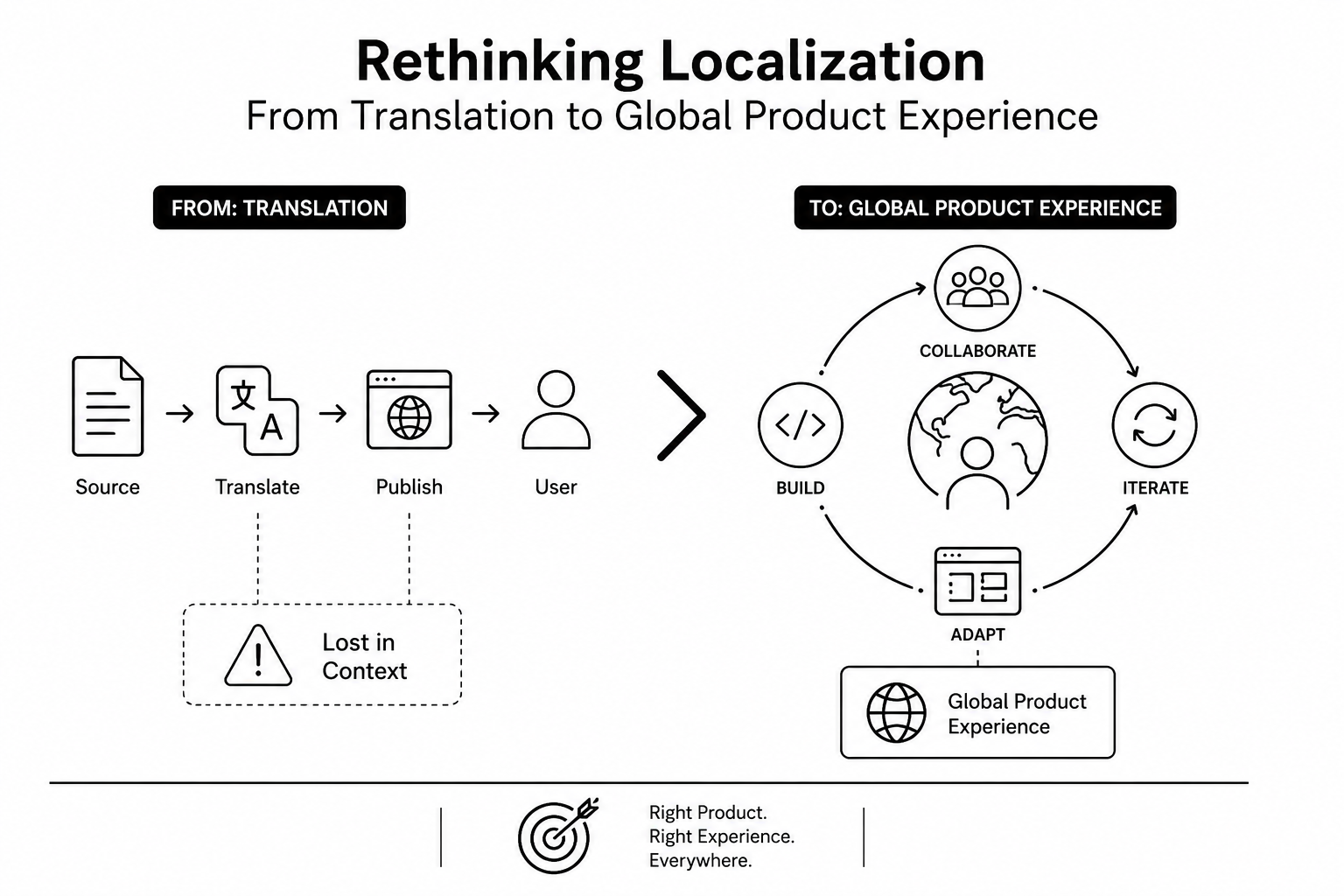
How context, collaboration, and continuous iteration shape truly global software
Localization is often reduced to translation.
That’s a misunderstanding.
In practice, localization sits at the intersection of development, QA, and user experience — and it carries a level of ownership that goes far beyond words.
In my role as a Software Localization Engineer, the work is less about language and more about orchestration: managing multiple releases, aligning GUIs across languages, tracking constant development changes, and ensuring that what ships is both technically sound and linguistically accurate.
But the real complexity lies in context.
A word like “Save” can appear as a button, a system message, or an action confirmation — each requiring a different translation depending on its role in the interface. Without context, even accurate translations can disrupt the user experience.
This is where localization becomes a collaborative discipline. Translators, engineers, and localization teams must work together to bridge gaps between language, design, and functionality.
And it doesn’t stop at release.
Post-release feedback, UI issues, and missed strings quickly become high-priority fixes — because users don’t experience “translation,” they experience the product.
Localization doesn’t just connect frontend and backend — it connects products to people across languages.
It’s not a support function. It’s a product function.
Roshi Mehta
Software Localization Engineer