
BOARD DESK I AI BEYOND TRANSLATION – HOW AUTOMATION IS RESHAPING LANGUAGE BUSINESSES
Everyone in this industry is asking the same question: will AI replace the translator?
Honestly? I am not answering that question anymore.
Not because it does not matter, but because while we are busy debating it, something far more interesting is happening right under our noses. AI and automation are not just changing how we translate. They are changing how we run the business of translation. And most of us, myself included for a long time, were not paying attention to that part.
Over the past year I have been experimenting sometimes successfully, sometimes not with how these tools are reshaping the way language businesses operate. Not the translation engine. The business engine. How we manage vendors, handle clients, track money, and maintain quality. The unglamorous stuff that determines whether a language business survives or scales.
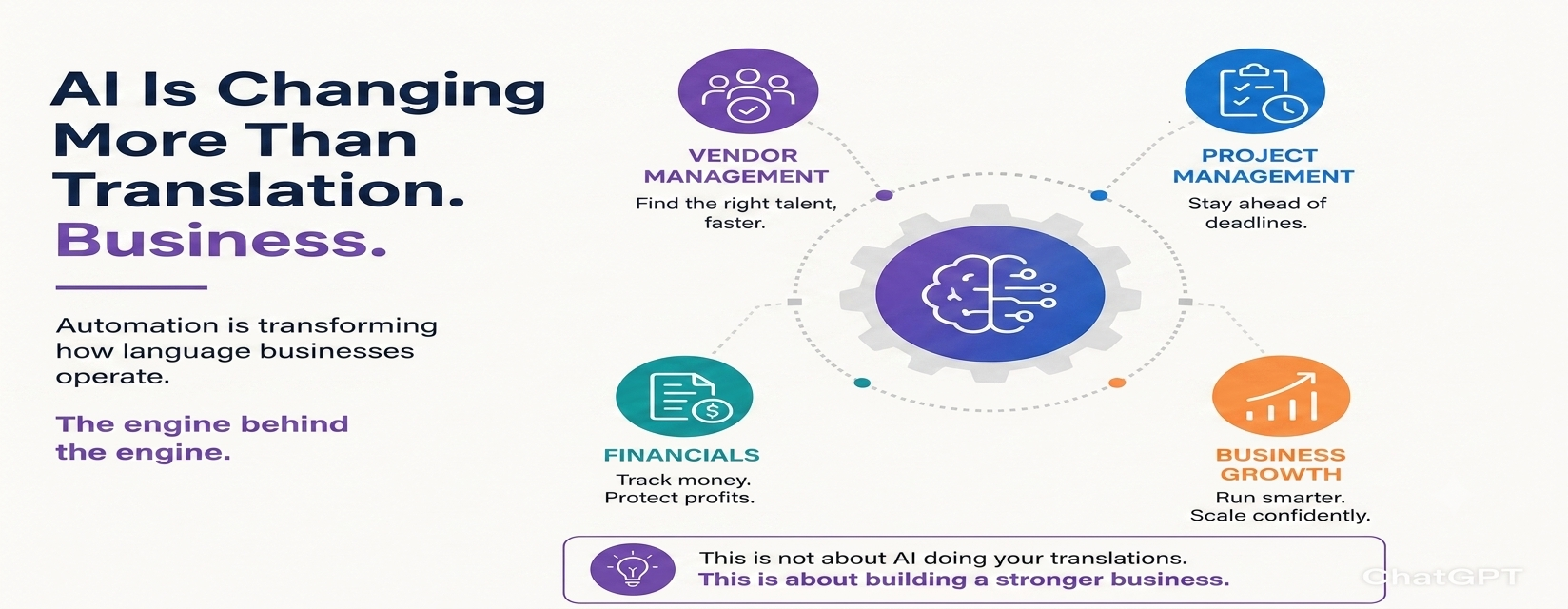
Take vendor management. A few years ago, finding the right translator for a specialized project meant digging through emails, spreadsheets, and memory. Today, a well-structured vendor database with basic automation can match a project to the right professional in minutes by language pair, domain expertise, availability, and rate. What used to take a coordinator half a morning now takes a workflow for a few seconds. That is not a small shift. That is a structural change in how we build and manage talent ecosystems.
Project management is another area that is changing faster than most people realize. Intelligent tools now handle task assignments, deadline tracking, and client communication touchpoints automatically. Bottlenecks that used to get caught only when a deadline was already at risk are now visible on days in advance. For smaller firms and freelancers especially, this kind of visibility was simply not accessible before it required expensive project management software or a dedicated coordinator. Neither of which most independent professionals could afford.
Then there are financials and this is the one nobody talks about enough. Late payments, untracked receivables, and messy vendor billing are not just administrative headaches. They are profit leaks. Automated invoicing, payment reminders, and cash flow dashboards are now available at little to no cost, and they are changing how language professionals understand the financial health of their own practice. A freelancer who knows exactly which clients pay late, which projects are most profitable, and what their average collection period is that person is making better business decisions than most small LSPs I know.
And here is what struck me: this is not just an LSP conversation. A freelance translator running solo practice is also running a business. The professional who gets their operations in order who stops chasing invoices manually and starts building systems is not just more efficient. They are fundamentally more competitive.
I have seen both sides of this. And what I am observing, across firms and independent professionals alike, is quietly significant.
This is not about ChatGPT doing your translations. That conversation is over. This is about what happens to our industry when automation starts touching everything around the translation and what we do about it.
I will be exploring this over the next few issues. Practically. Honestly. From the inside.
Stay with me on this one.
Soham Kakade
Vice President - CITLoB